Blog
Agentic SDLC, Live on Stage: Here's How the Feature Shipped
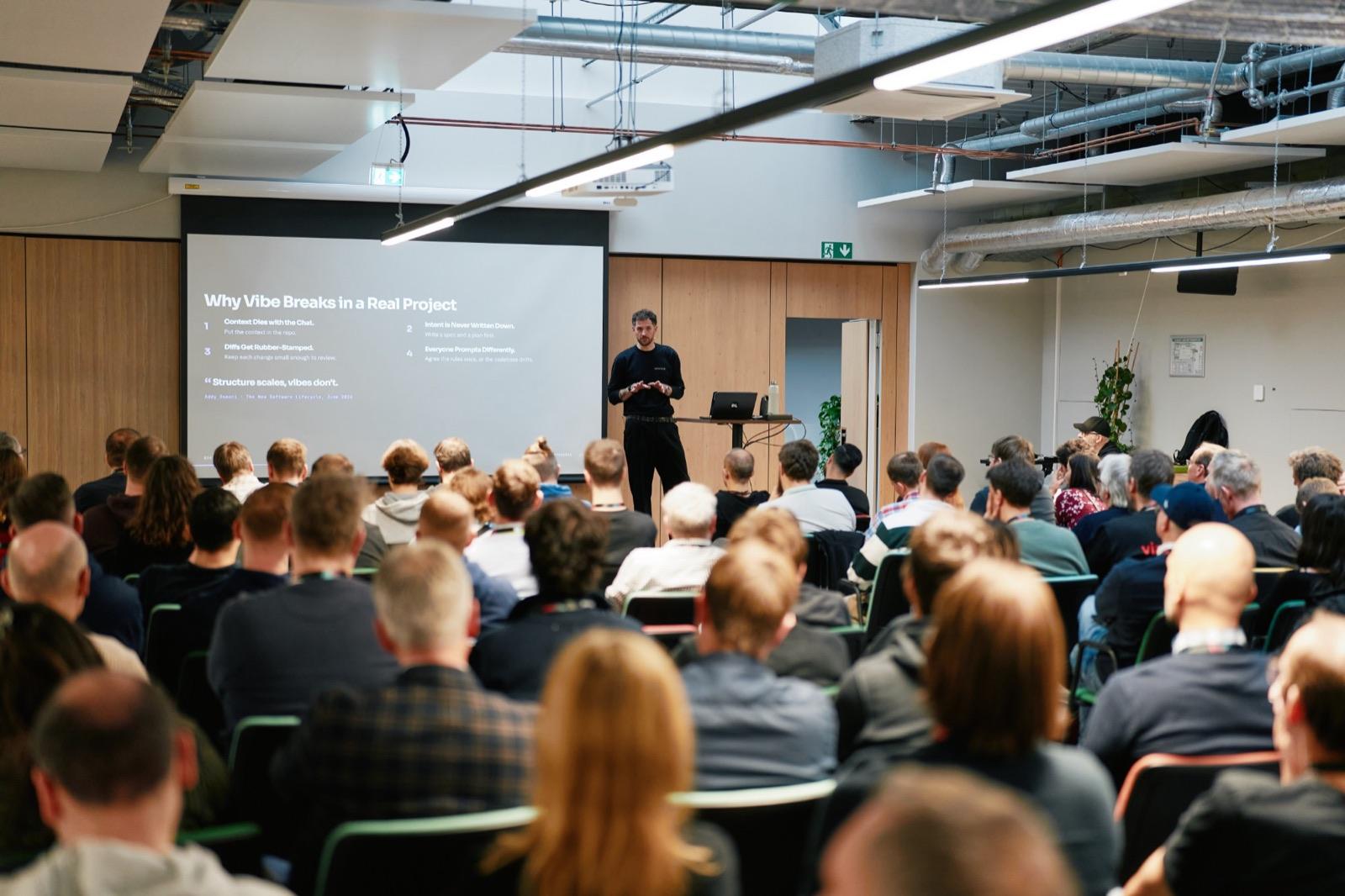
Digitale Leute Summit, Cologne, 17 Nov 2026.
Marius, Digitale Leute
One Linear ticket, written live on stage, through every station of an agentic SDLC: ticket, context, spec and plan, build, review, hand-off, all the way to production.
On Tuesday, 17 November, I gave a five-minute live demo in my talk From Vibe Coding to Agentic Engineering: Designing the Modern SDLC at the Digitale Leute Summit in Cologne.
The demo task was small on purpose: show the weather in the training calendar of N+One, my AI cycling coach. The backend already had weather data for the Dynamic Coach, so the work was a new route, a UI component, translations and tests. It was small enough for five minutes on stage and real enough to ship.
A demo only proves the first few stations. This post follows the same ticket afterwards: how it was sliced, what context the agent got, where the spec stopped the agent from guessing, what broke on the way to production, and how a spec change turned into a second release on Sunday.
Slicing the Ticket So It Can Ship
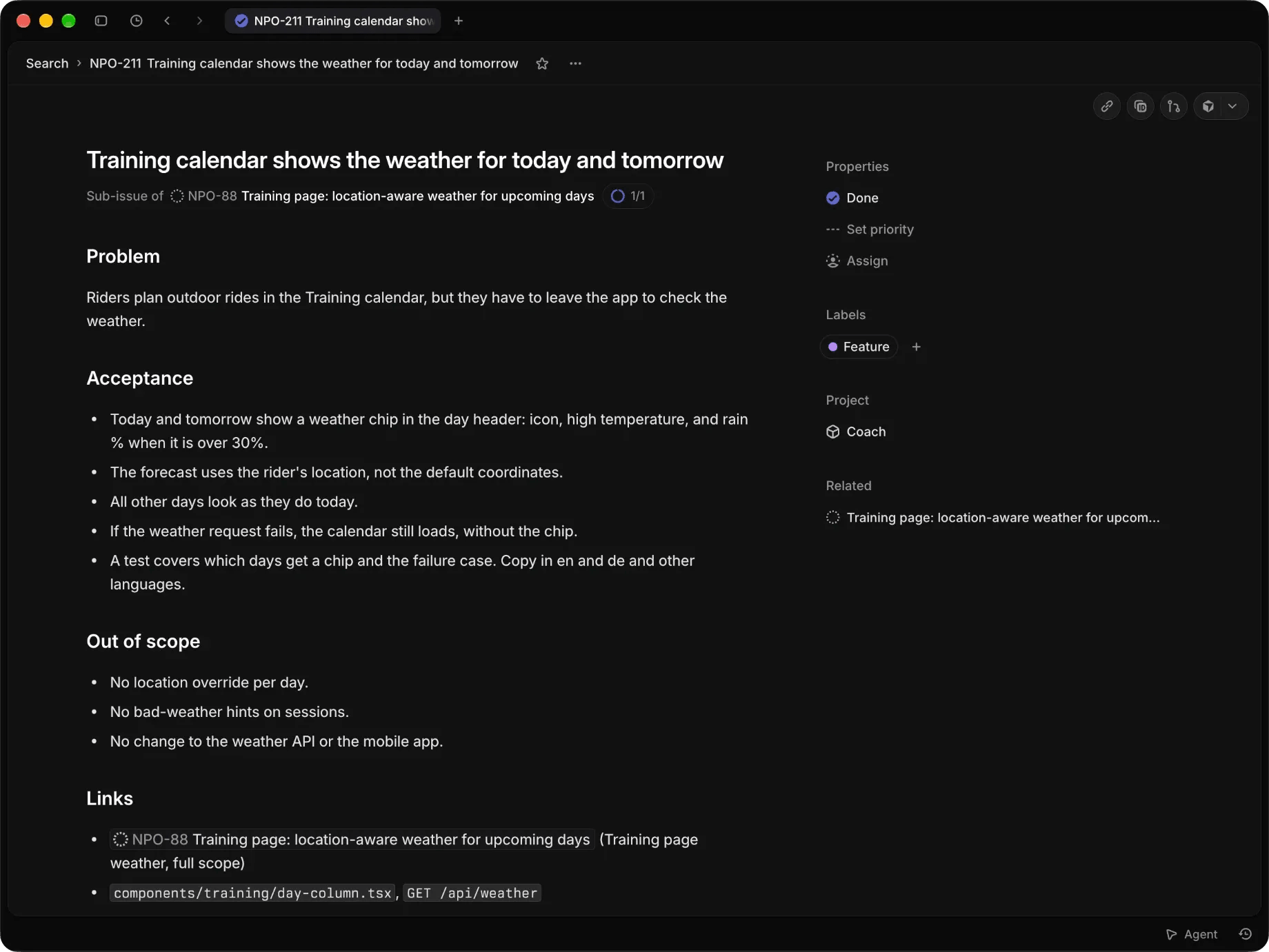
The full idea had been in Linear since July as NPO-88: location-aware weather for upcoming days, with a multi-day forecast, location overrides for travel, session hints, wind warnings and mobile support. That's a real product bet. It isn't a five-minute demo, or a clean first task for an agent.
At 10:49 on stage I created a smaller child ticket, NPO-211: Training calendar shows the weather for today and tomorrow. It is the demo ticket from the slides, and it has the four parts I ask for in every ticket: problem, acceptance, out of scope, and links.
One detail changed live. My prep slide only asked for English and German copy, so I added "and other languages", because N+One runs in six.
From Ticket to Code
My rule for this station in the talk (slide 19) is simple:
If a new colleague couldn't start from the ticket, neither can an agent.
The demo followed the loop from the talk, which I described in more depth in Agentic Engineering Across the SDLC. Everything stayed inside the repository:
- Ticket. Cursor read NPO-211 straight from Linear through MCP, with the acceptance criteria and scope intact.
- Context. The repo's
AGENTS.mdset the architecture rules, the six-language requirement and the check command. - Spec. The agent drafted an OpenSpec change before any code: proposal, design, tasks, and spec scenarios that include the failure path.
- Plan. I approved the plan in Cursor's plan mode, then the build went one task at a time: a summary helper, an API route, the calendar UI, and tests.
- Review. Automated review caught the mechanical misses. I read the diff and decided what ships.
The failure case from the ticket became a scenario in the spec, before any code existed:
#### Scenario: Fetch failure omits chips

- GIVEN the weather request fails or returns no usable forecast
- WHEN the Training week renders
- THEN all day columns still render
- AND no weather chip is shown
- AND workouts remain visible and interactive
The design doc went one step further on location: if the rider's location can't be resolved, omit the chip rather than show the weather for a default city. That's the decision an agent would otherwise make on its own, quietly, with the most convenient fallback.
On stage we got through the ticket, the spec and the approved plan, and the agent started on the first task before my five minutes were up. That was the point of the demo: not a finished feature, but a change that a colleague could pick up from the repo and understand.
After the Demo
If this were a pure demo story, I'd say I merged on stage. That isn't what happened.
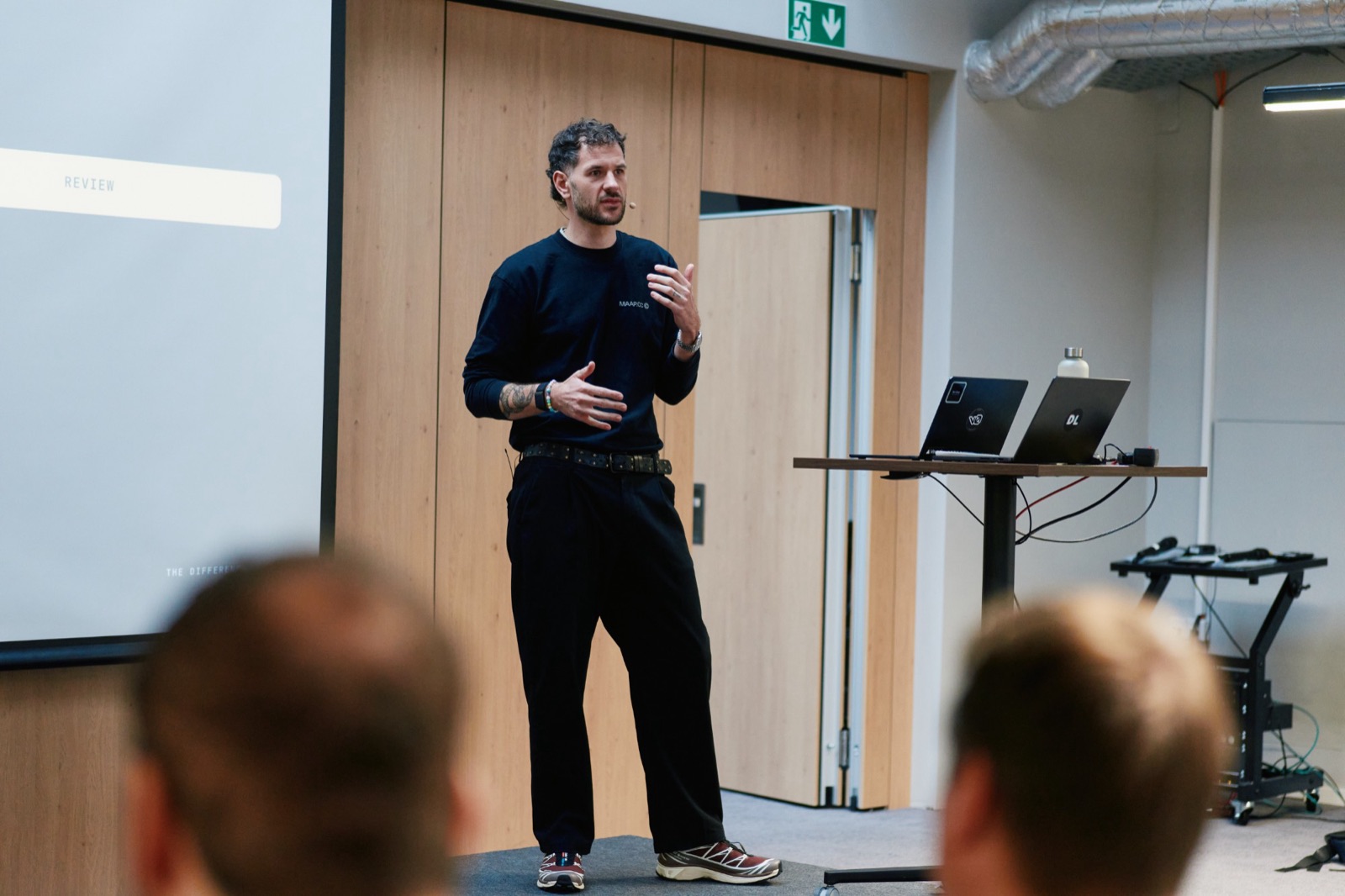
The live session produced the shape and the spec. Five minutes is enough to get from a ticket to an approved plan, not to build, review and verify a feature. And one of the rules in the same talk is: never merge a PR you haven't read yourself. So the build, the review and checking the real calendar happened at my desk.
The first version landed on Thursday evening at 20:22: 23 files covering the spec, the API route, the calendar, six language files and tests.
Production didn't go green right away either. Unrelated commits had broken the build, so the weather chips went live at 22:51, once those were fixed.
Then I had a second thought, as a rider: when do I actually ride? Either in the morning or in the afternoon. So ideally I see the weather for both. Especially in the cold, it helps to know whether the sun comes out later in the day. One daily high for today and tomorrow doesn't tell you that.
Because the spec was already in the repo, changing it on Sunday was quick. I updated the spec and shipped a second change:
- The forecast covered three days instead of two. It has since grown to a full week.
- The single high became morning (around 09:00) and afternoon (around 15:00) icons and temperatures, with translated tooltips.
- Rain still only shows above 30%, so dry days stay quiet.
That went live cleanly at 13:12 on Sunday, ready for riders planning their week the next day.
One honest footnote: NPO-211 stayed in Backlog until I sat down to write this post. In the talk I argued that merged is not done. Apparently shipped isn't the same as updated in Linear either.
Here's the whole path of the ticket in one view, from the backlog to the last release:
- by me
- by the agent, after my review
- live for riders
Shipped from one ticket4 releasesNPO-211, N+One training calendar
- NPO-88: location-aware weatherFive ideas in one ticket
- NPO-211 written on stageProblem, acceptance, out of scope, links
- Spec and planOpenSpec change with the failure path
- First version mergedRoute, calendar UI, six languages, tests
- Today and tomorrowDaily high, rain above 30%
- Morning and afternoonThree days, two icons per day
- Chips on mobileShared DayWeatherChip in the day list
- A full weekSeven days, mobile and desktop
What Shipped for Riders
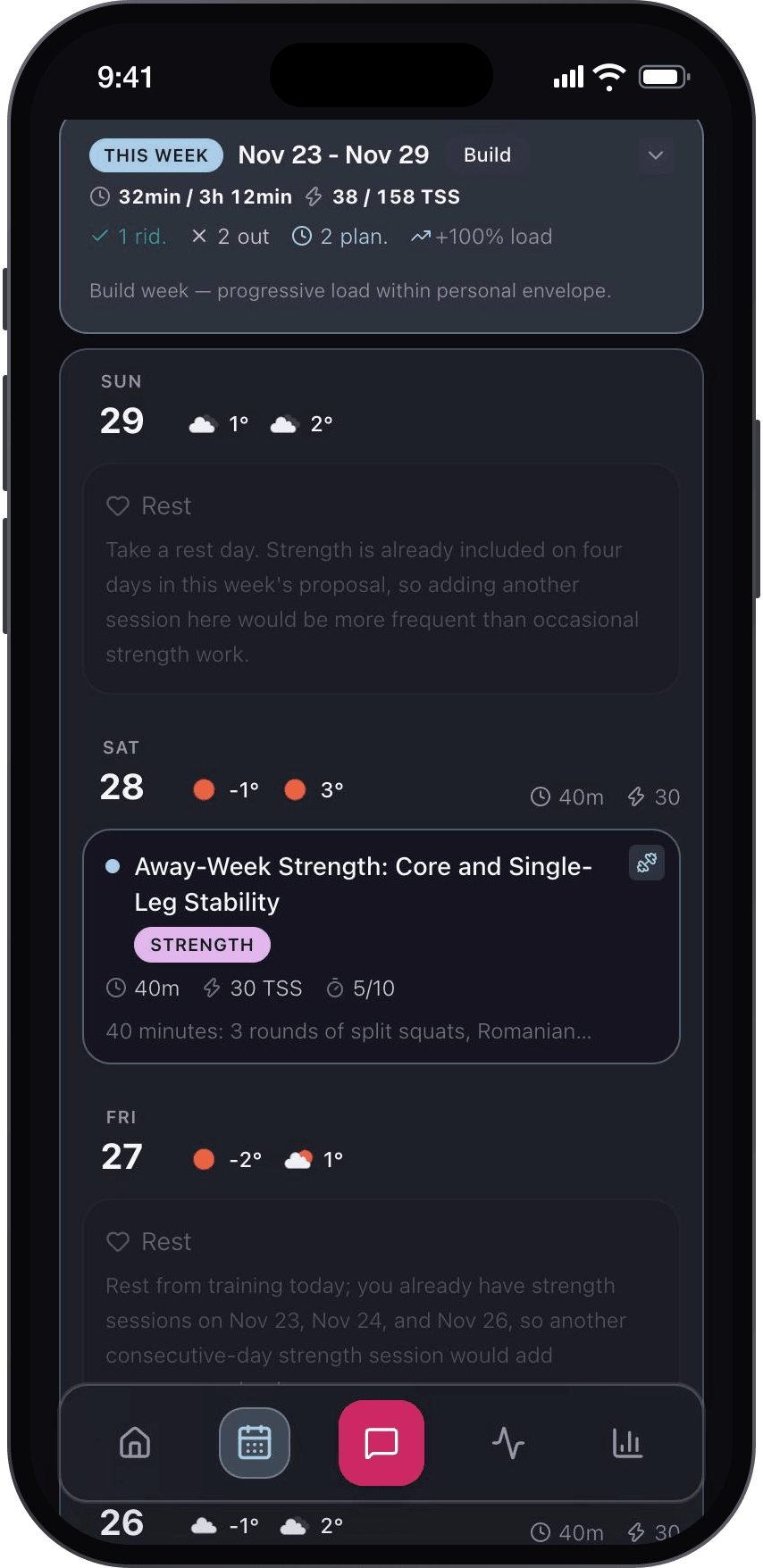
Open your training calendar and the coming week now shows a small weather chip on each day: morning and afternoon conditions, temperatures, and the rain chance when it's above 30%. Days beyond the forecast's reach simply stay without a chip.
Mobile was out of scope for NPO-211, so at first the chips only showed on desktop. They followed as a separate slice, and that was a good check on the original one. The mobile list already received the forecast. It just never rendered it. Because the chip logic lived in one place from the start (the summary helper, the 30% rain rule, the translated tooltips), mobile was mostly wiring: a shared DayWeatherChip in the day list, plus tests.
The same evening, one more change extended the chips from three days to a full week, on mobile and desktop at once. Because both views use the same component, the change only had to happen in one place, plus the weather integration and tests.
Three safeguards sit behind it:
- Your location, never a silent fallback. It uses the Dynamic Coach's location from your recent rides, travel or home. If that fails, there's no chip.
- It never blocks the calendar. The weather loads separately, so if it fails, your week still shows.
- All six languages. English, German, French, Spanish, Italian and Portuguese.
Four Lessons from One Small Feature
- 01Scope is an engineering leverNPO-88 sat in the backlog for four months because it bundled five ideas. NPO-211 shipped because it took one slice and said what was out of scope.
- 02Failure cases belong in the ticketWriting "the calendar loads without the chip if the weather fails" and "the rider's location, not the default coordinates" into the acceptance criteria stopped the agent from inventing a misleading fallback.
- 03Specs make iteration cheapGoing from a two-day high to three days of morning and afternoon took one spec update and a clean diff, not a rewrite.
- 04A green build isn't product tasteTests check behaviour. It still took a rider looking at November weather to ask for morning and afternoon instead of a daily high.
Template: An Agent-Ready Ticket
The structure is deliberately boring. Four headings, the same ones from the talk (slide 19), and any tracker can hold them. A template doesn't make a ticket good. What you write under each heading does: the one sentence that names the real problem, the failure case nobody thought of, the thing the agent must leave alone.
Here it is with the hints I keep in mind while filling it in:
## Problem
What is wrong or missing, from the user's side. One or two sentences.

## Acceptance
What done looks like, checked against the real system.
Include the edge case and what happens when something fails.

## Out of scope
What the agent must not build or change in this ticket.

## Links
Parent ticket, related PRs, and the files and docs to start from.
In NPO-211, the line that mattered most was "the rider's location, not default coordinates". It took ten seconds to write, and it's why the agent didn't ship weather for a city the rider isn't in.
If you want the full context, I wrote up the two days at Digitale Leute Summit, including the dark factory debate and where human judgement still belongs. The slides are below, opened on the demo ticket.
What's the one line in your tickets that saves you the most rework? I'd love to hear it. Reply on LinkedIn or send me a message.
If you ride outdoors and want a cycling coach you can talk to, one that looks at your weather, calendar and training load together, take a look at nplusone.app.